What is Europe? The European Union appears as contemporary promoter of a European identity due to the following aspects: as corporate identity and reincarnation of European substance, as political construction with the aim to continually update a common disposition, as a peaceful cooperation, with democratic and humanistic values and by consolidating the economic union. And it grows. The European Union.
The conditions of a future member’s integrity reveal themselves at its borders. The process of “becoming European” becomes officially legible. Political, social and economical processes, changes, breaks and rejections in the South-Eastern European bordering countries identify and differentiate an entity. From an economic point of view the enlargement negotiations formally pave the way, which has long been trampled on and is now becoming a multilane transit-road. The referees of the Symposium “Mission Europe” gave an idea about which tasks and conflicts – in ideational, humanitarian, ecological, social and cultural regard - a European Movement is faced with:
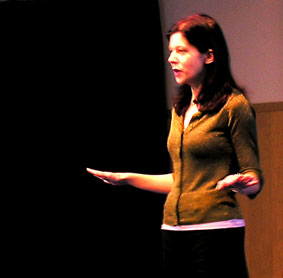
Ksenjia Miliojevic from the European Movement in Serbia asked the audience to describe the picture they have of Serbia. As she expected Serbia’s image in Western Europe was/is either negative or unclear or even non-existent. Moreover, she highlighted the irrational political changes in the opinions of the Serbian population - which seem incalculable to the outside – and the diversity of the political parties. She also presented the visa-fellowship campaign of her organisation that offers the possibility to travel to Western Europe to students and young people, which is so far made difficult or even impossible.
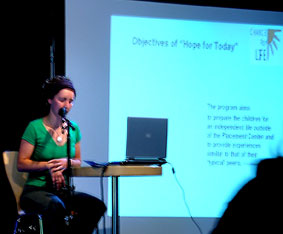
Heidi Nitzsche from the Chance for Life Foundation, an organisation working with and taking care of HIV positive children, offering them accommodation and a safe environment, told about total cultural marginalisation and the prohibition of showing pictures of HIV positive and orphaned Romanian children.
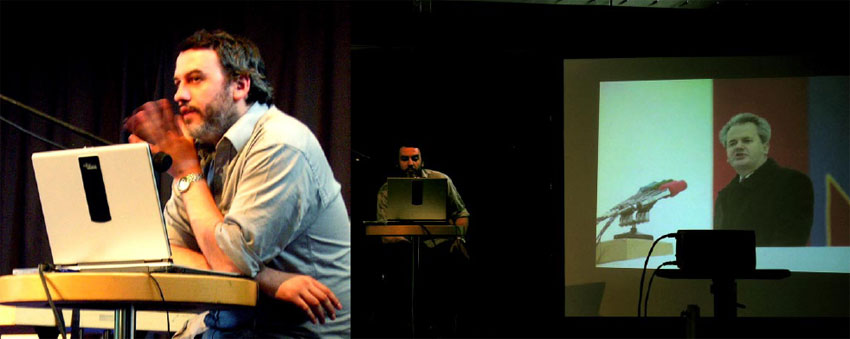
Vladimir Tupanjac, Culture and Arts Programm Director of the Center for Cultural Decontamination Belgrade, showed pictures and video material of demonstrations, protests of the people and artistic activities that took place in Belgrade in the 1990s and have so far remained largely unknown to the Western European media.
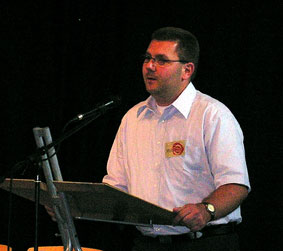
Mathias Rauch from the Department of Economic Policy Research at the University of Leipzig talked about the danger of the Kosovo becoming a ghetto due to stagnating economical development and a lack of an EU investment policy. In comparison with Bulgaria and Romania, the Kosovo receives much less of the financial support for modernisation of the agricultural sector or education. The unemployment rate of nearly 50% and the continuously insecure status of forming an independent government also point to a growing exclusion of the region from the economical progress of the more privileged EU candidate countries such as Romania and Bulgaria and respectively the EU neighbouring countries Hungary, Slovenia and Greece during the next years.

A linguistic and cultural philosophical presentation by Dr. Sonja Neef about Europe as a concept of a travelling translation thwarted and extended the horizon to poetic-abstract levels. By means of the mythological figure of Europe who is robbed, seduced and searching for her mother tongue, she unfolded a subjective identification process. This process is always linked to a painful moment of differentiation and positive changes within the actors. Her argumentation opened up a room for personal reflection of the topic.
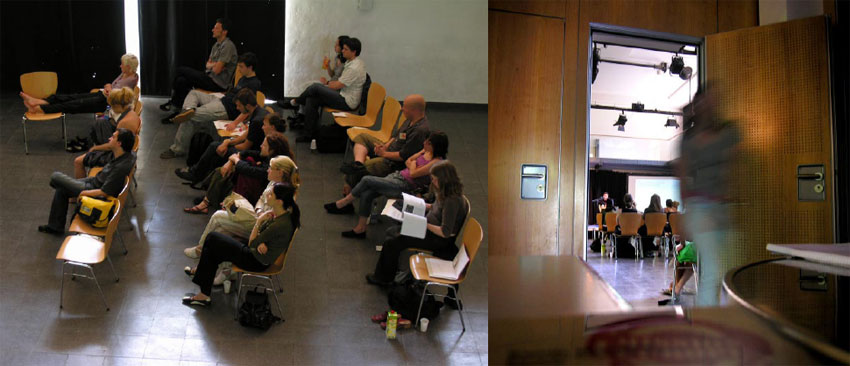
These and seven more presentations offered the audience as well as the participating referees and artists differentiated views, historical perspectives and complex descriptions of the status quo of the project “Europe”, crossing the borders between disciplines, expertise and artistic approaches.
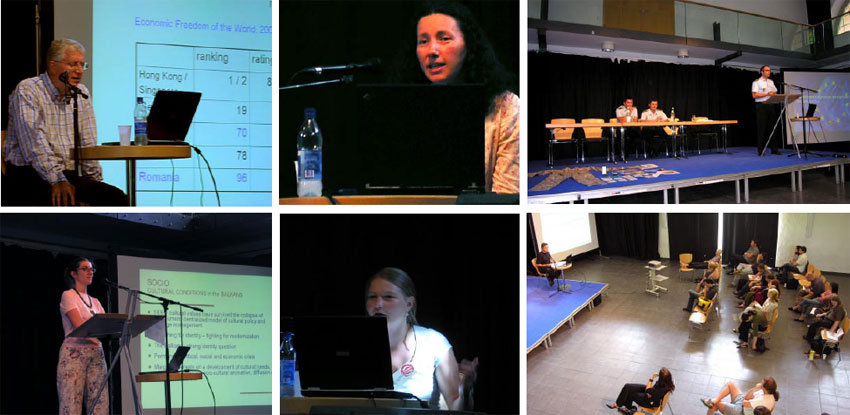
top left to right: Dr. Wolfgang Sachsenröder, Milena Bokova, German soldiers, who served in Sarajevo; bottom left to right: Katarina Tojic, Grit Gierth, Dr. Sinisa Kusic